
KEEPING TRADITIONS ALIVE
From the Sinai to Kalamata...via Italy. Some traditions travel no matter what.

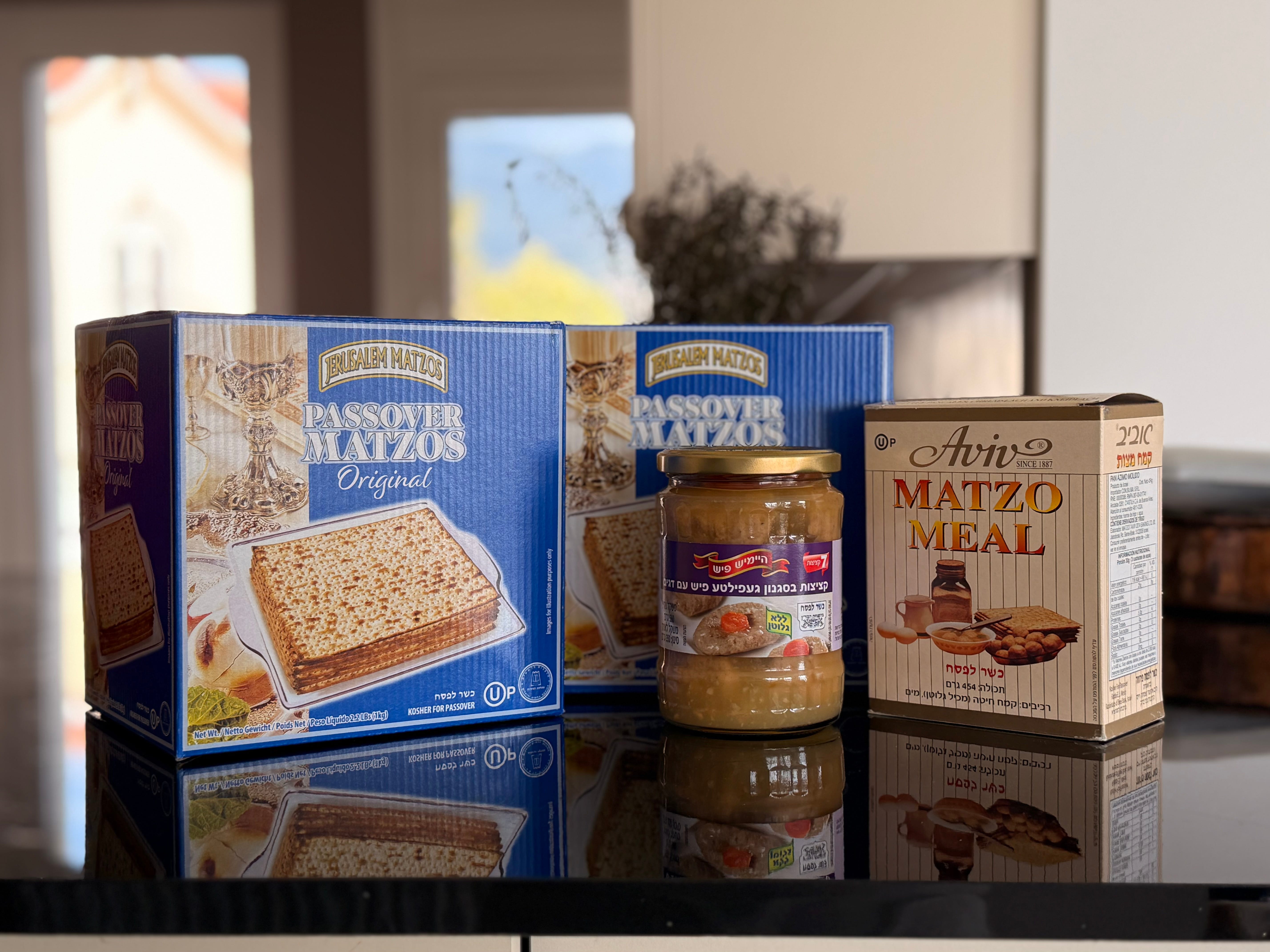
Last year, when the cashier at the Athens Chabad store—one of the very few places on the mainland where you can reliably find Jewish food—told me two things: 1) there would be no Passover matzah or matzah meal until a few days before the holiday, and 2) shipping two boxes of matzah to the Peloponnese would cost 50 euros because they can only put it on the bus, I did what any reasonable, tradition-loving, slightly unhinged person would do.
I kvetched, complained. I argued. I may have delivered a short but passionate monologue, and then I swiftly turned and left with dramatic effect, while my husband, reddened and a little embarrassed by my outburst, left with me. I wrote to Rabbi Mendel Hendel afterwards, and he did not flinch. At least I don’t think he did, because it was in an e-mail.
He responded the way only a rabbi can—calm, composed, possibly thinking, this is not the first matzah-related crisis I’ve seen. “Don’t worry,” he said. “We’ll figure it out.”
This phrase sounded reassuring.
But “we’ll figure it out” in Greece is less a plan and more a philosophical position. It exists somewhere between optimism and destiny, with no real commitment to timing. “We’ll figure it out” can mean tomorrow. Or next week. Or eventually. Or never.
In my mind, after suggesting several of the nearly 1,000 courier services in Greece, many of which have a 1-day service for 8 euros, I felt I had gotten through.
I was wrong.
Fast forward to this year. Passover (Pascua, Pesach, the Last Supper) is approaching—quietly, steadily, like a deadline that refuses to negotiate—and I return to Chabad.
Same story. No matzah yet. Still $50 to ship it to Kalamata.
For some context, it is currently cheaper to express mail a package from Greece to Djibouti than it is to move matzah 160 kilometers south. If there’s a logistical explanation for this, I’m not sophisticated enough to fully grasp it.
In Yiddish, we call this a shanda. A disgrace. An embarrassment. But truthfully, this isn’t about Chabad. They’re doing what they can in a country where kosher-for-Passover supply chains are not exactly a national priority.
This is about something much larger—and far more universal:
It is hard to maintain your traditions anywhere outside your home base.
And not just Jewish ones.
Try being an American in Hungary at Thanksgiving. Turkeys exist, but ovens often have small spaces. I improvised by turning my entire oven into a roasting pan—foil everywhere, rack repositioned, a strategy best described as “hope.” It worked, but only after hours of hovering and basting. Miraculously, I didn’t break the oven.
Ask a British expat attempting a proper Yorkshire pudding without the right ingredients.
Or a Muslim family during Ramadan, trying to recreate the foods that mark iftar the way they remember them.
Or Hindus searching for the exact Gulal powder in glorious colors that make Diwali feel like Diwali.
Even Greeks abroad will tell you—try finding the right setup for Easter lamb, the kind that tastes like memory, and suddenly you realize tradition is not just belief. It’s logistics. When we lived in upstate NY, my husband and son had to travel up to Albany to the one butcher who had a whole lamb.
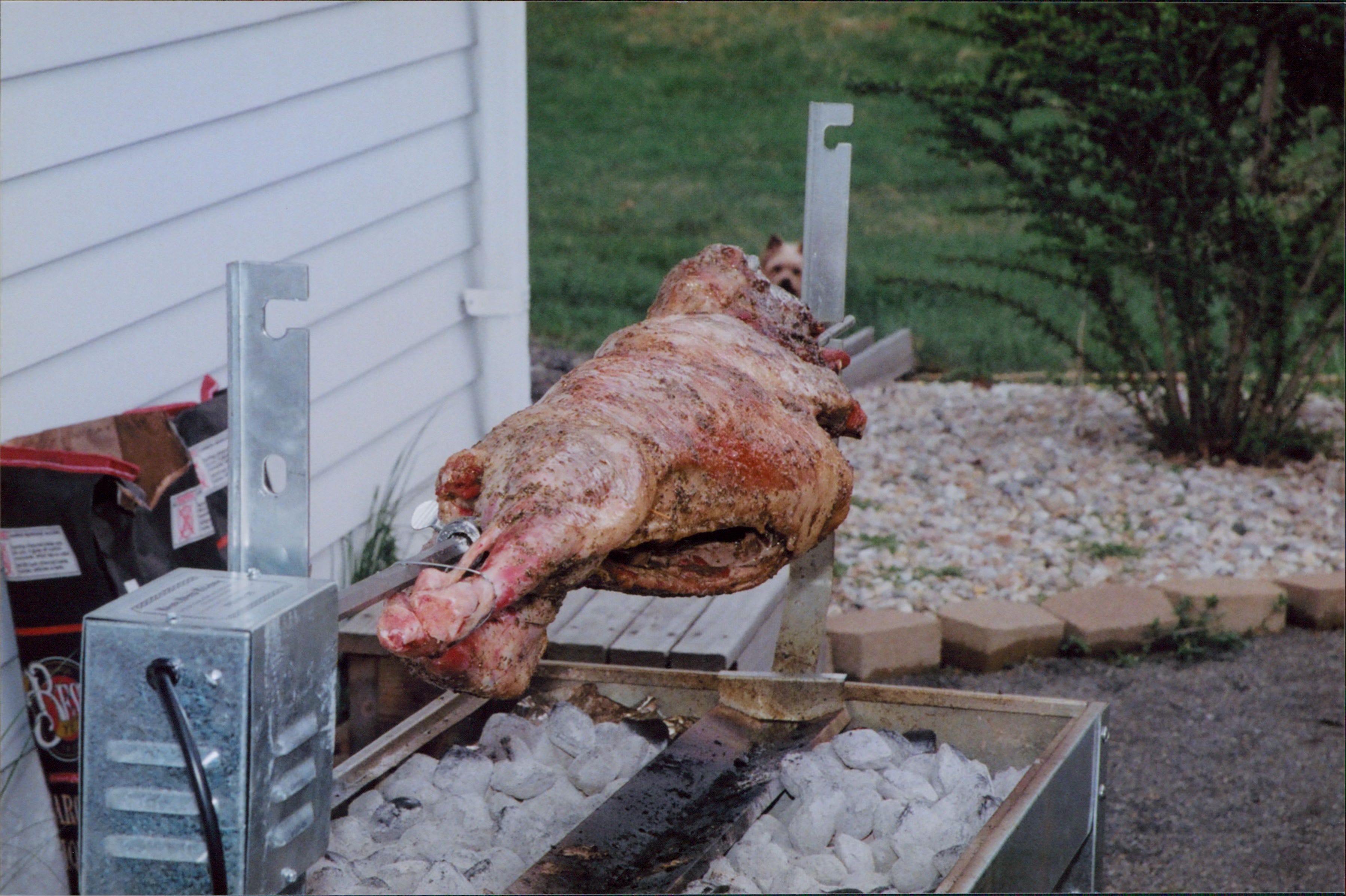
And if you really want perspective, look at China.
Tradition there isn’t occasional—it’s woven into everything. Lunar New Year alone comes with a full script: dumplings for wealth, fish for abundance, foods chosen not just for taste but for meaning.
Now imagine trying to recreate that abroad, where ingredients are missing, substitutions are questionable, and “close enough” is the best you can do.
So people adapt. After all, experimentation is the key to innovation, and innovation is the key that makes tradition work anywhere in the world. They order from three different suppliers. They substitute ingredients. They make it work—but not without effort.
Because that’s the quiet truth no one tells you when you move abroad:
Tradition doesn’t have to disappear.
Which brings me to this year’s solution, as seen above.
My husband—clearly the more rational half of this operation—found an online supplier: Kosherfood.it.
Yes. Italy.
The country that gave the world the word “ghetto” is now supplying my Passover matzah. History, it seems, has a sense of irony.
And somehow, that feels right.
Because if there’s one thing I’ve learned, it’s this: Tradition survives because people insist on it—argue for it, overpay for it, improvise for it. Even when it’s inconvenient.
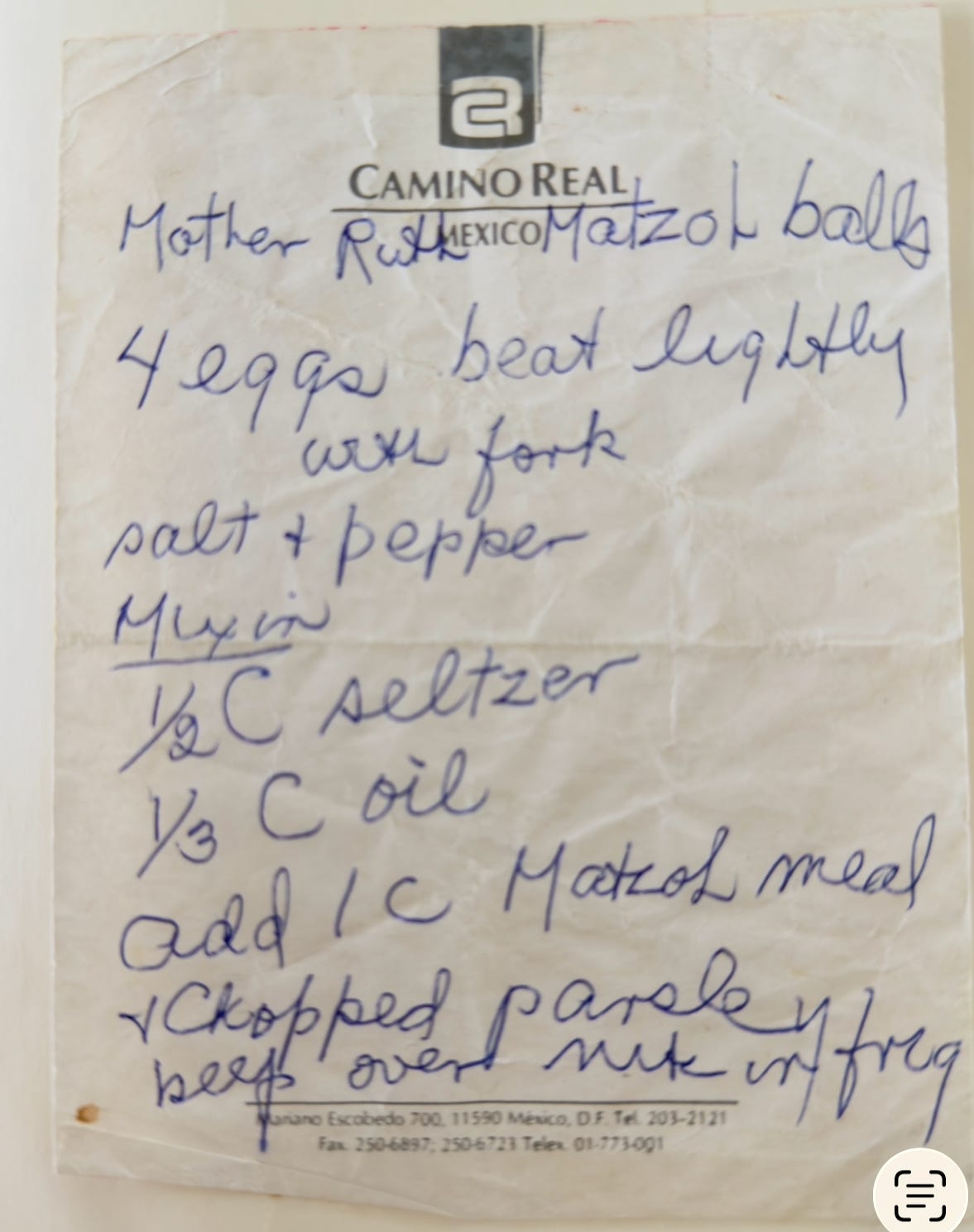
Although my Mom left this world in 2011, her handwritten recipes have followed me through my life (lives?) in Hungary, England, Venezuela, Spain, Mexico, Argentina, and now Greece. But I will never pay $50 for shipping unleavened crackers across a country the size of a postage stamp.
Happy Whatever You Celebrate!
Karen in Kalamata
I'm glad you found a reasonable solution for your matzah, Karen! And it's lovely that you are so committed to keeping up your traditions. It is easier for me in this way because I have a much looser connection to traditions and mostly just celebrate whatever festivals the people in the country in which I am living celebrate.